
-

Rethinking Meritocracy: How to Create a Truly Fair Workplace
Most leaders want their teams to succeed based on hard work, skill, and results. You deserve to rise if you show up, deliver, and go the extra mile. It’s a compelling idea—simple, fair, and satisfying. But have you ever noticed that some people seem to take off faster than others, even when everyone seems to be working hard? Or that some employees never seem to catch a break, no matter how much effort they put in? It’s not a matter of talent or drive—it’s the reality that not everyone starts from the same place.
-

Team Dynamics Under Pressure: How Stress Affects Collaboration and Decision-Making
When a team faces high-stakes pressure, the effects ripple through every conversation, decision, and task. Stress changes the way people interact, often in subtle but significant ways. Decision-making processes, collaboration quality, and the team’s overall dynamics can shift quickly when stress is involved—sometimes without anyone even realizing it. Understanding how stress influences team performance is essential for everyone in the workplace. Navigating these tense moments effectively requires strategies for managing stress, whether guiding a team or simply trying to take care of yourself.
-
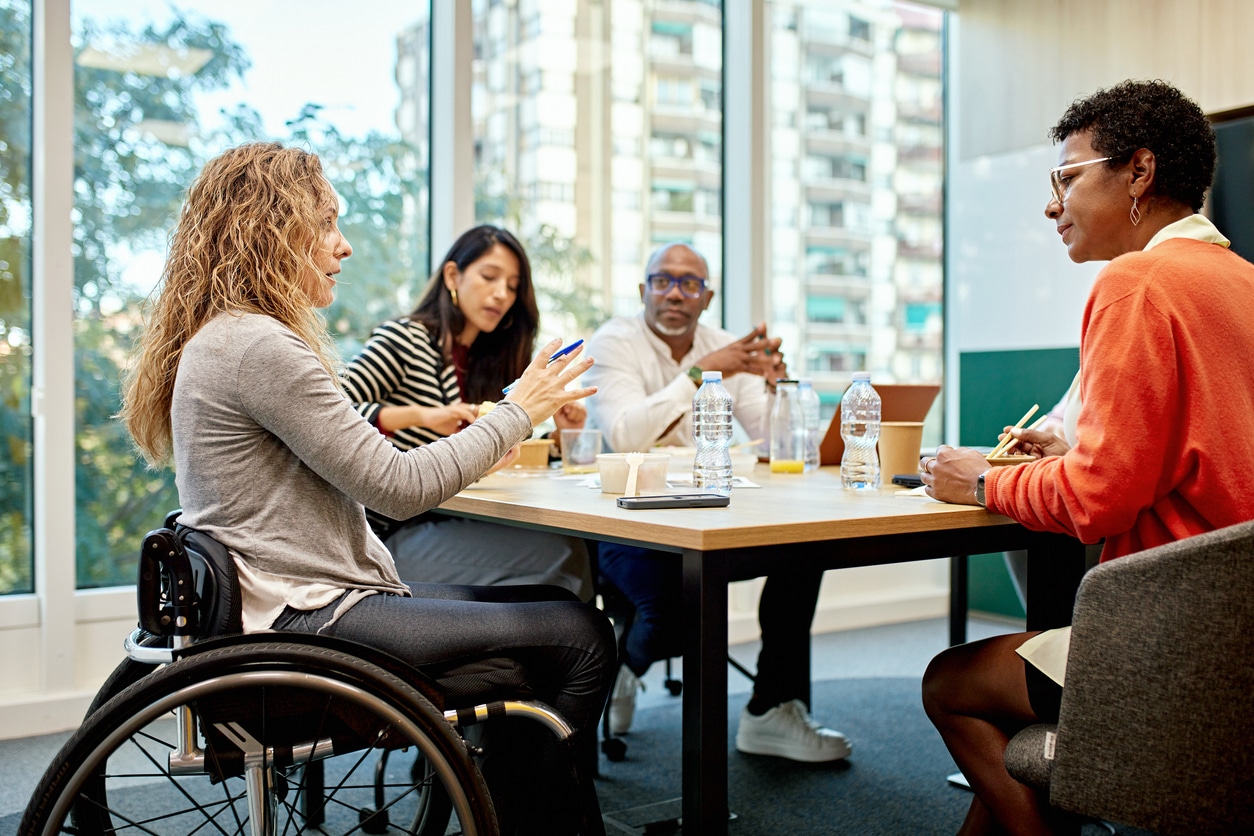
Generational Differences or Miscommunication? What’s Really Driving Workplace Tensions
We explore the cyclical nature of generational conflict, the impact of hybrid and remote work environments, and how intersectionality adds complexity to these dynamics. .
-

How to Help Your Team Manage Election-Related Stress and Anxiety at Work
As the upcoming US election draws near, it’s common for tensions to rise and stress levels to spike in workplaces across the country. Politics is deeply personal, potentially divisive, and undeniably stressful for many employees. With an increasingly polarized society, it’s more important than ever for workplaces to establish a supportive and inclusive environment that acknowledges and accommodates the many different experiences of employees. In this post, we’ll explore how to support your colleagues who may be dealing with election-related stress and anxiety.
-

Building an Inclusive Skills Framework: A Step-by-Step Guide for HR Leaders
The workforce is evolving, with more companies turning to skills-based talent strategies to meet the demands of a competitive landscape. Moving away from traditional credential-based hiring and career development, organizations are now focusing on the practical skills employees bring to the table. This shift enhances productivity while also creating a more inclusive work environment by providing opportunities for candidates who may have been overlooked under old models. For HR leaders, the challenge lies in developing skills frameworks that align with business objectives and diversity, equity, and inclusion (DEI) goals.
-

How Leaders Can Inspire Through a Values-Driven Approach
Strong leadership doesn’t come from policies or procedures; it comes from clarity of purpose. The most effective leaders create environments where people feel connected to something bigger than the bottom line. That connection often comes from a set of shared values that guide every action, decision, and goal. Today’s workforce craves this connection more than ever. According to the 2024 Randstad Workmonitor report, employees are drawn to employers whose opinions, values, and worldviews reflect their own, seeing them as like-minded partners in forging connections and improving equity.
-

A History of DEI and the Future of Work
Diversity, Equity, and Inclusion (DEI) have become integral components of modern workplace culture. These initiatives aim to create environments where different perspectives are valued, opportunities are equitable, and all individuals feel included and respected. An important aspect of DEI’s evolution is the concept of multiculturalism, which gained prominence in the 1990s and 2000s. Multiculturalism emphasizes the recognition and appreciation of different cultural backgrounds within organizations. The history of DEI, including the rise of multiculturalism, reflects broader social, legal, and economic changes over time.
-

Embracing Flexibility: How Adaptive Policies Create Inclusive and Trusting Work Environments
Flexibility at work is becoming the foundation for successful, thriving workplaces. Businesses are rethinking how they structure everything from work hours to performance expectations. This shift isn’t just about adjusting to new norms—it’s about creating a culture where employees are empowered to work in ways that best fit their lives. Flexible policies are good for productivity and play a key role in building trust, promoting inclusion, and improving overall employee satisfaction. The Business Case for Flexibility The demand for flexibility is rooted in the very nature of modern work.
-

Five Strategies for Aligning Employee Development with Your Company Goals
What if the key to driving your company’s mission forward wasn’t just rooted in leadership’s vision, but in how each employee’s career path is mapped to that mission? The success of an organization often hinges on how well individual ambitions and growth opportunities are interwoven with broader company goals. When employees are able to see a direct connection between their professional development and the company’s success, both engagement and productivity soar. For people managers and leaders, aligning these two forces can feel like balancing competing interests. However, when done thoughtfully, it’s a win-win that enables both inclusivity and sustained business…
-

How to Practice Active Listening for Inclusive Team Success
Effective communication often hinges on one crucial but frequently overlooked skill: the ability to truly listen. While many professionals excel at articulating their thoughts and ideas, fewer are adept at the art of active listening—a practice that goes beyond merely hearing words. In the workplace, active listening is a critical tool, especially for leaders committed to fostering an inclusive environment. The Essence of Active Listening Active listening is a conscious, deliberate effort to fully understand, interpret, and respond to the messages being communicated by others.
-

Introducing Inclusion Geeks: New Name, Same Commitment
We have a huge announcement that we’ve been working on for the past few months… We’re changing our name! Over the past four years, a lot has changed for us, including how we do business and what we’re focused on. It’s time that our company name reflects our work, honors our roots, and articulates our values. That name is… drum roll… Inclusion Geeks! Here are the reasons why we believe this name makes the most sense for the future of our company: What does this mean for you? Hopefully, not much!
-

What it Means to Create Trust at Work
In every corner of the workplace, trust is the invisible force that holds everything together. It’s the foundation on which successful teams are built, the fuel that drives collaboration, and the glue that binds us through challenges and successes alike. Yet, trust is not something that can be taken for granted—it must be built, nurtured, and protected by everyone in the organization, from leaders and managers to individual contributors. So, what does it mean to create trust at work?