
-
Celebrating Juneteenth
June 19, 2021 marks 156 years since slavery was abolished, and the past year has seen a greater societal awareness of how system racism is very much still embedded in the fabric of America.
-

Inclusive Virtual and Hybrid Team-Building Exercises
2020 saw many teams having to transition quickly from in-person processes and norms to virtual work. We learned that what worked well face-to-face doesn’t always translate when everyone is connecting via a screen and/or phone line. As we see a slow return back into the office this year, we recognize that the ‘new norm’ for many will be remote-first and more flexible hybrid work options. As some people start to gather in person again while others will stay remote, finding meaningful ways to connect will be critical to ensuring an inclusive work culture.
-
5 Videos You Must Watch to Learn About Diversity, Equity, and Inclusion
Take some time to watch these incredible videos on diversity, equity, and inclusion. If you’d like more, see our previous post on 14 videos to watch. Eliminating Microaggressions: The Next Level of InclusionTime: 8:59Who: Tiffany AlvoidDescription: In this talk, Tiffany lays out how this behavior manifests itself, the role you play, and what you can do to avoid perpetuating its continued existence in society. Let’s Talk About ABLEISM ft. Imani Barbarin / Mars & Blair ShowTime: 3:36Who: Imani Barbarin // Mars & Blair ShowDescription: The Mars & Blair Show is a regularly hosted YouTube channel by Mars Sebastian and Blair…
-

Moms in the Workforce: A Way Forward
By: Michelle Keefe, CEO MomUp For over one year, women have been this country’s safety net during the pandemic. Without proper social infrastructure, the US leaned on parents, primarily mothers, to bear the burden of maintaining childcare and schooling to support the nation. Some mothers did this while working jobs simultaneously; others were forced out of work which added additional financial and healthcare burdens. We’ve been armed with data, endless anecdotes, and harsh truths that highlight the fundamental paradigm shift that needs to happen. At the same time, companies are in a race for high levels of inclusive talent.
-
A Letter to the Inclusion Geeks Community
Dear Inclusion Geeks community, Almost a year ago, we wrote a letter to all of you sharing our thoughts on what was at that point in time a swell of protest against social injustices, sparked by the murder of George Floyd and the subsequent support around the Black Lives Matter movement. We wanted to take a moment to reflect on what’s happened since then, and share some further thoughts on where we go from here.
-
Climate Action Must Be Intersectional
When we think of Earth Day, many of us might think about plastic straws or recycling. Some of us might think about saving the rainforest, the whales, the polar bears. Where to begin? It’s overwhelming. And for many of us, the question is how much of ‘saving the planet’ is our personal responsibility? While there’s nothing wrong with wanting to recycle and protect non-human animals, it’s important to be a bit more critical and intersectional when fighting for climate change. Intersectionality, a term coined by Dr.
-

DEI Steering Committee – Part 3: Futureproofing the Work of Your DEI Steering Committee
In this final installment of this DEI Committee series, we’re diving into how to begin to look at wider support structures and measurements of success of the work of the committee. In this three part series, we will be focusing on: Engage the System The work of a DEI Committee is most effective and accelerated when there is system-level buy-in, support, and executive engagement. These factors are needed to create sustained systems-level change.
-

DEI Steering Committee – Part 2: Sustaining Your Efforts
Creating a DEI Committee is an essential step in demonstrating your organization’s commitment to bringing forth and prioritizing changes related to diversity, equity, and inclusion. In this three part series, we will be focusing on: However, a committee is not self-sustaining, and just forming one is not enough– the work must be nurtured over time. The work that a committee does must be viewed as a long-term, continual effort that is both strategic and vital to the future of your organization.
-

DEI Steering Committee – Part 1: 3 Steps to Forming an Effective DEI Steering Committee
In the wake of the events of 2020 and early 2021, your organization may have realized that diversity, equity, and inclusion (DEI) training is a starting point towards a larger DEI journey. If you’re eager to put what you learned during training into action and create organizational change, consider forming a DEI Steering Committee/Council. Forming a DEI Steering Committee/Council is not the only or final step in your organization’s DEI journey but it is an important one. Establishing a DEI Committee/Council demonstrates your ongoing commitment to DEI and will enable your company to: In this three part series, we will…
-

Stop Asian Hate: A Note from Co-CEO Felicia Jadczak
Yesterday I personally shared some thoughts and reactions to the news of the murders in Atlanta. We wanted to follow up today with a community-wide note to address what has happened. Eight people were murdered, six of whom were Asian women. To be clear, language matters and we need to call this what it is: a hate crime. This past year has seen a terrible uptick in anti-Asian violence and racist incidents, with new data from Stop AAPI Hate showing that nearly 70% of the nearly 4,000 reported incidents between March 2020 and February 2021 came from women.
-
Intersectionality at Work
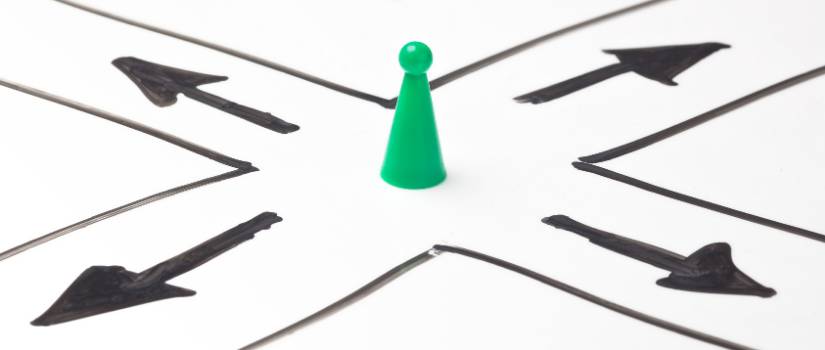
Examining issues in the workplace through an intersectional lens is paramount to conversations about diversity, equity, and inclusion. When working to create a more inclusive and equitable workplace, we cannot overlook the fact that power, identity, privilege, and oppression are inextricably linked. When we do, we run the risk of perpetuating systems of oppression and inequities towards other groups.
-

Inclusion Geeks Book Club: Beyond Leaning In
Women face so many day-to-day slights in the workplace. You can think of it as a thousand everyday cuts. Each cut may seem small on its own, but together these have cumulative and ripple effects. Below is an excerpt from BEYOND LEANING IN, (out now!), a new kind of business book written as a novel by Melanie Ho in order to show how true-to-life characters navigate bias in the workplace. This scene is from the perspective of Debra, a trailblazing CEO who has broken a lot of glass ceilings and mentored many women across her career.