
Rethinking Fundraising and Equitable Space-Making with Erica Rife
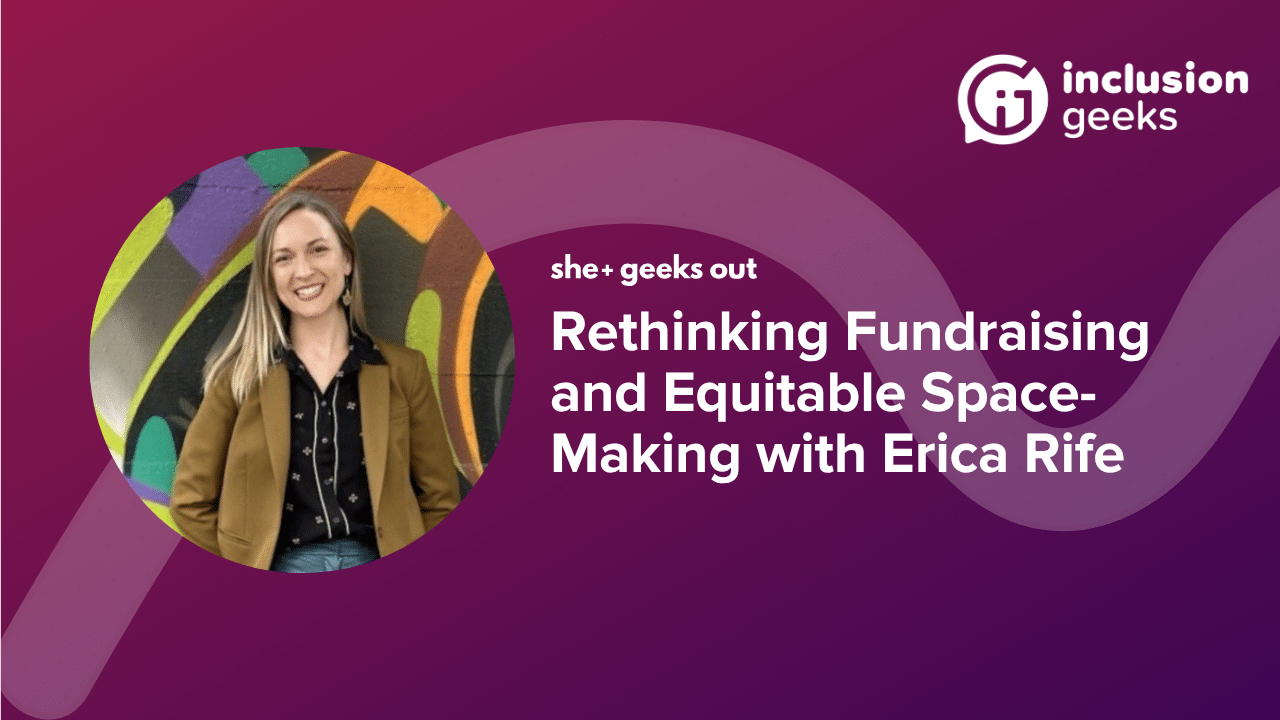
What happens when a self-described lost soul who studied nutrition and art history ends up leading an architecture nonprofit and decides some money isn’t worth taking? Let’s find out!
In this episode, we speak with Erica Rife, Executive Director of the Architecture Foundation of Oregon, former head of Design Museum Portland, and MassChallenge alum, for a candid conversation about leading with your values in a sector built on donor money.
We dig into how one event at MassChallenge introduced her to design as a way of thinking, why a playbook that works in Boston wouldn’t work in Portland, what her grad school research on whiteness in philanthropy revealed, what community-centric fundraising means, and why architecture’s long, expensive road to licensure keeps the field so homogeneous.
Chapters
00:00 – Introduction & Welcome, Erica Rife
00:41 – From Nutrition and Art History to MassChallenge and Design Museum Portland
08:20 – Why Erica Never Wanted to Be an Entrepreneur
12:20 – Boston vs Portland and a City Built for Design
17:49 – Grad School, Whiteness in Philanthropy, and a Street Art Detour
28:46 – Community-Centric vs Donor-Centric Fundraising
34:35 – Saying No to Problematic Donors and Protecting Staff
40:20 – Who Gets to Design, Diversity and the Path to Licensure
46:36 – Unlearning Startup Habits and Learning AFO’s History
50:50 – Closing Thoughts & Where to Find Erica
00:06 Hello and welcome to the She Geeks Out podcast where we geek out about workplace inclusion and talk with brilliant humans doing great work making the world a better and brighter place. I'm Rachel and I'm Felicia. Our guest today is Erica Rife. She is the current executive director at the Architecture Foundation of Oregon, based in Portland, Oregon.
00:26 That's the Other Portland for those of us East Coasters out there, Erica is what we call an accidental entrepreneur. She came up in the Boston startup scene of the mid 2010s and she shares her journey with us into entrepreneurship, nonprofit work, how she was led to design and architecture.
00:42 So you're going to hear all about how Boston and Portland are similar and different, what equitable philanthropy is all about, and some of the nuances of leading a long-standing organization. But before we hear from Erica, first, let's get into it. Okay, so true confession time.
01:00 Yes. Felicia and I got into it.
01:06 We talked for an hour about the Elizabeth Holmes Nathan Fielder documentary, and it should be in your, and we're gonna publish these at the same time. Cause like, why be dramatic about it? I mean, I I know people are just waiting to hear our. our thoughts about it.
01:22 I mean, honestly, I've been like trying to listen to a lot of stuff and people have not gone as deep as we have in all the ways. I'm sure it will come and but maybe maybe we'll be first. I think my only regret is that I didn't just hit record and talk to myself immediately after the movie with like my immediate reactions, but that's my only regret.
01:44 But yes, we talked so much about it. We probably could have talked more, but yes, if you want to listen to more about That with full knowledge that it's spoilers abound go and check that out but we don't want to take too much up of this lovely podcast because you're welcome to you're welcome to the you're welcome listeners and you're welcome Erica yes we have a lovely guest coming up so really you know hit pause go listen to you know our discussion about you can see everything come back but for now we would love to welcome to the show Erica All right, our guest today is Erica Reif, executive director at the Architecture Foundation of Oregon.
02:27 Thanks for joining us. So glad to be here. We are so excited to catch up with you. It's been a while and I can't wait to get into all the things. So let's just start out by getting into your origin story. So you went from someone who was super deeply embedded in the Boston startup scene, which is where we all first met back in the day.
02:44 I mean, that feels like a million years ago at this point. Wow. Then you went to customer success at a design company, to a nomadic design museum, and then now to the Architecture Foundation of Oregon. So what do you think has been sort of like the thread that has connected all those various moves?
03:01 Yeah, gosh, the thread, I, two threads. One being being sort of a lost soul, but also one that holds curiosity in everything. So I wouldn't say that I was the type of lost soul that couldn't find.
03:17 Anything that I was interested in, it was almost that I had analysis paralysis of being interested in too many things, and you know I'm a I'm just the quintessential millennial. I graduated from undergrad in 2009, so terrible year to graduate and try to forge your career path.
03:37 And I even in undergrad didn't know what my career path was. My mom said, "What do you like to do?" And I said, "I like to eat and I like to go to museums." So I Studied nutrition and art history and again graduated in 2009 with those with those degrees and had absolutely no no leads in Arizona so they were in Boston and they said why don't you come out to Boston there's a little bit more going on here than in than in Portland and I actually saw a career coach and did you know all of the different exercise what am what am I good at but what do I like That I'm good at, not just one or the other, and we landed on nonprofit work, like to do good in the world and bringing people together.
04:24 And so I started looking for events, internships at nonprofits, and found one at Mass Challenge. And I was, I literally googled entrepreneur and went to the library and got like entrepreneurship for dummies because I I genuinely didn't.
04:41 Even know what that word meant. I had zero education and experience in business, but you know, nonprofit events, internship, sure, why not? And Mass Challenge at the time was really kind of hiring anybody that they could get their hands on that was willing to do it.
04:58 And I just absolutely fell in love with with entrepreneurs and with the creativity the the interested in making the world a better place for the most part, but but seeing a problem and wanting to create a solution for what that problem was.
05:18 And you know, for folks that maybe don't know, Mass Challenge, I don't know where they land now, but at the time was the biggest accelerator program founded in 2010. Oh gosh, I'm getting all my facts maybe mixed up here, but I think founded in 2010, you know, as a As a solution to this to this you know problem of the economic system as we knew it was imploding, so let's create more you know more opportunities for for people to create their own jobs and and so you know we took 128 companies every year.
05:54 So I got this like massive breadth of different types of entrepreneurs, you know healthcare and technology and and all that stuff. And I just absolutely loved again the creativity of it, but you know everybody always said what's what's the company that you're going to start one day and I was like no never not ever I don't ever want to be an entrepreneur but I was so curious about about the system of of how do you identify the problem create the solution that kind of thing and there was one event that I helped that I produced I was the I was the program director at the time Where I looked at all the people that were going to be in the audience and what it was, what the purpose of it was, and how we were going to create kind of interactive solutions during the event to get people's minds moving and have visual components to it and takeaways and all this stuff.
06:45 And it was so exciting to me. And I went to my professional mentor after the fact and I said, "What was that?" And he said, "That was design." And I was like. What? Why didn't anybody tell me that before? You know, I would have studied that. I would have I would have gotten more into this.
07:01 So I so I had this word design in my mind all of a sudden, and I I was like, what what are we talking about when we have that word in here? When it's not graphic design, you know, this is ironic now, but when it's not architecture, like what is this workplace strategy design thing?
07:21 And then there was a startup. In Mass Challenge that went through that was called Design Museum Boston, and they were a nomadic museum of design and took on that philosophy that design is in everything that we do. So, how can we better understand the process of design, you know, as it relates to everything.
07:43 The first exhibition that I went to that they did was on play. I didn't have kids at the time. I didn't immerse myself in child land, but I was. Absolutely fascinated by what the concept of play was and the design of play and the psychology behind it and all this stuff and I said I I want to work for you you're the you're what I what I want and what I want to be exposed to and help other people be exposed to it as well and they said we are you know we're not hiring here but we're or actually I I had I had one this is so stupid I had one foot out the door to go to New York which was just like ludicrous Knowing what I know now, but I said, "Could I start Design Museum New York for you?" And then they said, "No, we're actually hiring somebody to run the branch in Portland." So I moved out to Portland, Oregon for for the East Coasters.
08:34 I am not in Portland, Maine. I'm in Portland, Oregon, and ran the company for three years. I'm sure we'll get into it, but I utterly burnt myself out at that job. I was the main person here. I did manage to To grow it to a point where I had another person working with me and we had interns, but it was, you know, if I don't get to the office, you know, for one day everything nothing nothing happens and that was a lot of weight on my shoulders.
09:03 But I absolutely loved it. You know, it was a a big inquisition into what is design, what is design in Portland, you know, versus Boston. How do people approach it here? It's quite it's Different in in various different elements.
09:18 We got I was there for three years, so we got to produce several different exhibitions, monthly monthly events, programs, all of this just absolutely fascinating stuff that I that I utterly loved, but like I said, completely burned myself out doing.
09:35 So go go back to school, go to get my master's program in nonprofit management, get a better understanding of kind of the you know. Core of business as opposed to the mission, but what is the business side of things?
09:50 And I was gonna travel the world and do a bunch of stuff that summer that never ended up happening. But then I, so I got my master's for two years. I actually was was quite interested in the in the museum world, getting into kind of formal museum world.
10:06 But then when I graduated, a board member at the Architecture Foundation of Oregon came to me and said, "You're." We're searching for a new ED, and you're the you're the right person for the job. So I've been I've been in that position for I'm coming on four years now, and it's been fantastic.
10:27 Oh my God, that's such an incredible story, and thank you so much for sharing. I there's so much to dig into from from what you shared, but something I want I had one quick question. Is you were very adamant that you were like, "I definitely knew I didn't want to be an entrepreneur," and I would like to dig into why you say that.
10:51 Especially, you know, Mass Challenge was early stage entrepreneurs, right? So people who were just at the brink of their idea, and man, for the most part, they were just.
11:07 Barely surviving. I know we just talked about barely surviving, but just here we are at our established jobs and we're barely good good prep for now. Continue, please. They you know the and and I think all of us have some of this and you you too are entrepreneurs so so I'm sure that you have this too is that your your deep belief this is something that you hold in your heart this is not Something that you're doing for the paycheck certainly, but you're you are trying to get people on board for the thing that you believe in so much, for the thing that you see as a solution to a problem, and it's you know at the at the top end of it, it is all about money, right?
11:50 People are making decisions to invest and support these startups based on if they're going to get a return on their investment, and you know that's that's a little bit. Harsh, but is the truth of it, and and so I just saw all of these people who were, you know, for lack of a better term for it, eating ramen noodles.
12:13 I mean, there were some people that were literally sleeping under their desks at Mass Challenge, you know, just just pounding the pavement to make it work. And I saw, you know, relationships flounder. I saw people that that you know their wives or their partners or their Children were struggling with with their parent trying to make this thing work and it just seemed really painful in in your heart and I am I'm an empath I am someone who holds those things really really closely that has led to a lot of my own burnout but that that was the thing and I also don't think that I've ever Come up with the idea that has that I would be able to run with, but it was it was so incredible and so challenging to watch all of these entrepreneurs fight to make their dreams come true.
13:13 That's so real, and I think it's I'm glad you kind of touch on that. It really, as you were sharing, Erica, I was kind of flashing back to those days, which is around the same time, like because 2009 to 11, I was in grad. School and then I met Rachel in 2013, and you know, so I feel like that moment in especially in the Boston entrepreneurship scene, we all kind of were like coming up together in a lot of ways, and you're absolutely right.
13:39 Like, I mean, I remember hosting Friends of Friends who probably were connected through Mass Challenge in some way, where there was this at least one or if not a couple women would come and like sleep on my couch once a month or something as they would come through town and like not have to pay for a hotel room and You know, yeah, you know, we're always looking for the free food at the events and networking to get the, you know, the glass of wine and like some cheese or whatever.
14:04 But and I was also thinking about how you know Rachel and I and and Rachel, if I misspeak for you, definitely jump in. But you know, we weren't looking to be entrepreneurs ourselves either for a lot of those same reasons I think you touched on. And you know, so sometimes you just kind of fall into it.
14:19 But the Boston startup scene, especially at that. Period of time was you know a really unique situation for a lot of different factors and I'm really curious how does the Portland or how did or how does the Portland startup entrepreneur scene kind of differ from Boston or was there overlap like was there similarities kind of how did that feel to you especially when you first moved made that really big move from Boston to Portland and and kind of get immersed into that area Yeah, I can I've spent a lot of time thinking about this because there was a notion of you know you are going to pick up what we have created in Boston, and you it is so successful here, and you are going to plop it down in Portland and and do the Portland thing.
15:03 And I had to fight fight is maybe a strong word, but I really had to stick up for Portland and educate the Boston team about what what the deal was in Portland. you know there are things like size there are things like money you know the there is there's a lot more old money in in Boston bigger you know companies that kind of thing but but I think the core thing that I recognized was was the university system college and universities Boston is jam-packed with I don't I don't remember the numbers off the top of my head but some you know What 60 within the like metropolitan area and many of them were entrepreneurial or had great business programs like people were coming to Boston to launch an idea and I was really enamored with that while I was at while I was at Mass Challenge was this idea of like launching in Boston and and so when I got to and you know The schools had deeper pockets there too, so schools were sponsors.
16:15 You had this really direct, you know, a lot of them had business plan competitions or like design programs, you know, things that were a direct pipeline into what we were doing professionally. And when I got to Boston, or excuse me, when I got to Portland, we have you know one main university, Portland State University.
16:35 We have a handful of other small ones, a lot of them. were have closed since I've been here, kind of smaller craft, you know, arts, liberal arts colleges, and that you know we've got U of O down in Eugene and OSU in Corvallis, and you know so a little bit further away.
16:56 So there was just this kind of expectation, like you just you plug into the university system, and I said there's not that that is not as. That that is not the the primary thing, so it was a lot of little bits kind of everywhere. And then the the second thing is that it it has really struggled to come back, but at the time when I moved here, Portland was a absolute hub for design.
17:23 We had a design week that was, I mean, people traveled across the country to come to. Portland's Design Week. It was one of the most busy, you know. I, people, people would ask if Design Museum was going to do things during, during the week, and I said no because we do that programming all year, all year long, and I actually need to be at all of these events in my capacity as a representation of, of, Design Museum Portland.
17:53 And I, you know, my, my calendar was packed full. I, I hadn't, I hadn't. No time. And then we had a really awesome events calendar that somebody had put together. So there was just this eventually was called the Portland Design Pup and you could look at every single design event that you were going on there.
18:12 There was just a very like cohesive and and design agnostic design culture here, and just like so many things. COVID really broke it all down. COVID and and I think general burnout from a lot of the people that were running those those various different things and and just kind of had to move on from it and then COVID you know did what COVID did.
18:36 But you know so I don't think it's gone from here in Portland I I'm sure we'll get into it but Portland also has a very rich history of being quite ahead of the game for for design. Thinking, so you know, back in the 70s, we were putting in streetcars and thinking really progressively about you know business and you know public private enmeshment in our urban design plan, really bike forward, you know, these these really amazing things that we have some of the most stellar design firms here, you know, Wyden and Kennedy is one of the.
19:17 very top graphic design oh that's probably not what they what they call themselves you know they did they do Nike they came up with just do it and you know so Coca-Cola like they are they're the biggest you know name brands they did all of the slogans and advertising and marketing for them and then some some absolutely stellar architecture firms here as well so Long-winded answer, but yeah, they they're they are different, with real strengths in both of them that don't necessarily easily translate into the other one.
19:56 I have more questions, but I kind of want to I I want to I want to switch a little bit, and I know we'll we'll get back to it, but I I want to talk a little bit about your what you did in grad school to take you back. I was I was actually joking with Just for the for the listeners because this is on Zoom I was chatting like that was such an instant time back when we thought that careers were you know tough to get things were right so cute so but in grad school you chose an interesting topic you wrote a research paper on white supremacy and philanthropy and I would love to know why you chose that And sort of what came out of that and how that sort of maybe informed some of your thinking in the work that you do today.
20:43 Yeah, the more and more I think about my grad school time, it was it was a fascinating time to go to grad school during the pandemic, you know. So I went because I had really noticed at Mass Challenge, at Design Museum, at all of the all of the companies that I had worked for is that the startup thing, you know, we constantly said you're building the plane while you're flying it, you know, so you are.
21:08 Just just making it work and learning by throwing spaghetti at the wall and I and I especially you know this was pre 2020 but a lot of attention on inclusion you know diversity inclusion and equity I almost said design and and I saw that we were performative more than we were actually making Internal change as a white-led organization, met with some resistance on how to do that.
21:43 And I I think especially pre 2020, we weren't being really handed. You have to do this work internally. I think a lot of companies did exactly that. That they were like, well, we'll just do an exhibit on diversity in design, and we will hire some folks of color and every and and just kind of saw little.
22:04 implosions here and there and everything and so I I said you know I've never even you know studied business but I also want to get a better understanding of how to do how to do the the it with DEI at the center and I and then COVID happened and George Floyd happened and Portland specifically was a huge hotbed of activity Most specifically to me in the art world, the street art that was created during that time, I I think deserves to be have its own wings in museum because it was so powerful.
22:44 But that's besides the point. That was kind of the other thing that I studied while I was there. But you know, then going into, you know, I I really had never looked at at business in this way, and I and I took my very first nonprofit class where we just kind of went through the.
22:59 Can we swear on here? So we were encouraged. Sorry, it took me a second to unmute myself, but I was encouraged. We I took the the first kind of like history of the nonprofit sector class and and you know just they laid out.
23:15 I mean, this was like day one that it was like the nonprofit sector exists because of the failures of government and the failures of the private sector and that people don't want to pay taxes to allow for. the the big existing entity, which is the government, to provide services for everybody, and so therefore the nonprofit sector exists.
23:39 And I and I came upstairs to my husband's office and I just laid down on the floor and I was like, it's fucked, it's all fucked. I don't, and he he was like, get up. You know, you are on day one. You gotta you gotta work through this. But so you know again this is 2020.
23:56 We're doing it all virtually, I we have equity and inclusion and and just history on our minds. I'm learning and unlearning as this is all happening, and so when it came time to pick a a topic, sorry, I'll actually scoot back a little bit.
24:13 I always despised in all of my non-profit jobs fundraising, right? Like who who likes fundraising? It felt so disconnected from the actual programming that we were doing. There was just always this. thing where you know a really problematic person would be presented as a possible funding source and it's like we just dropped all of our values because we would be able to get this funding and then some people will come to us and say hey we you know not really interested in what you're doing but I like the premise and I would love for you to then build my idea you know off you know What I now understand, or what now I know to be mission drift of you know just now and and you accept it because you need the money and it maybe is a cool idea and it's somewhat adjacent to what you're doing.
25:04 So I was you know learning about these concepts. I was reflecting on my professional experience and so when it came time to write our our big research paper, it wasn't a thesis, but it was you know what is the topic that you want to.
25:19 Dig really deep into I determined you know whiteness and philanthropy where did this where did this come from and went back to you know the turn of the century where modern philanthropy was born and you know the the names that you know the Rockefellers the Carnegies the Fords and the across the board the reason for their philanthropy was to clean up images when Horrific things were happening.
25:48 Explosions were happening on, you know, steel job sites and people were dying and therefore, let's build a library and put our name on it and and all of them despised paying taxes and so they were creating opportunities to fund what they wanted to fund without without having to pay taxes for it.
26:11 So it was a very enlightening. Topic to go into and I came out of school really guns blazing like I am going to change it and found found a lot of really really meaningful institutions that are or initiatives rather that are working to change it and I've spent I spent a lot of time studying it again very very freshly during the pandemic And have followed it now.
26:44 We can get into all of that stuff, but it's a very it's it's a very curious thing to try to tackle. Well, I mean, curious, and also these are big problems you're working to tackle. And you know, honestly, like I I know you're not looking for this, but like I commend you because this stuff is not easy.
27:03 And I I felt it when you said you laid down on the floor and you were like, oh yeah. Broken. That's how it is, you know, so many so many days of our lives, but it's interesting because as you were sharing, Ark, I was thinking about the previous question that we just had asked you before about you know sort of Boston versus Portland, and it kind of feels like a lot of similarities in that, like trying to have that discussion and that realization, and honestly kind of like that holding space for the fact that what works in one space doesn't necessarily just Copy, paste, and translate 100% over, and same thing in the world of design.
27:38 You know what I think we all can agree on is I think the world of design is pretty white, and a lot of it's for a lot of those reasons you touched on just now in your your answers. And how do we, you know, not just say, "Well, this works here in this way," so it's just going to work for everyone in every possible iteration of everything we're ever thinking about.
27:59 And how do we kind of expand that to allow for movement and change and different ways of thinking and different ways of doing? So I think there's a lot of similarities that were kind of pinging in my brain as you were sharing that. And you know, I just as a quick side note before I get into my next question, because I want to talk more about equitable fundraising and you know, is it even impossible?
28:21 But I want to just do a quick aside, just more of a fun aside, because you mentioned street art and I just love street art. So much, and I don't know if you know this, or I know Rachel I think remembers and knows, but again, back in the day, like back in those whatever, what do we call that decade, the mid 2010s, like the worst naming nomenclature of all time, but in that time frame, I was so so so into street art in the Boston area and Somerville area, and I created a whole Instagram account for street art that was anonymous essentially, and oh my.
28:53 God, what I found, and again, this is a totally different topic for a different conversation, but what I found over the course of basically just posting pictures of all the cool street art and graffiti that I was seeing, being anonymous, is that people started assuming that I was a guy, and so it was like this really interesting, you know, speaking of like, you know, what are these worlds and who inhabits them?
29:15 The world of street art artists is very predominantly male. And so people started thinking I was a dude, and so they would be like, you know, hitting me up on DMs and being like, "Hey man, you want to go smoke up?" And like, you know, we'll we'll go tag some shit and smoke up in the woods. I'd be like, "Hey man, maybe not this weekend." Just an observer.
29:34 Anyway, that is a totally different. I love that. I did not know that you did that. I I am obsessed with with street art. I just absolutely adore it. So we share. Are we all going to start a museum together for? Street art. Say less. I mean, I mean, say less.
29:49 Yes, yes. Erica, you might not want to start businesses, but that's like literally my favorite pastime. That's amazing. Let's keep doing it. Well, there is. Yeah, we'll have a website up by the end of this. Yeah, yeah, yeah. I will file the paperwork later today.
30:05 There, there's an organization here that I'm obsessed with that's called the Portland Street Art Alliance. Oh. And they are they try to they don't try to they very successfully serve as kind of the the middle person between street artists and then the entities that want to you know produce street art and a ton of other stuff they do advocacy work for street artists they help you know detangle the perceptions and the prejudices that people have against street art they are just one of the most phenomenal organizations that I know of I I just absolutely love it.
30:40 I'm just so excited that we get to. Partner with them, Yeah, for our new business. Yeah, yeah, they'll be a great partner. I'm just thankful, I guess, I guess thankful that I didn't know about them back in the day because I probably would be out there more than with you right now. 100%. I'm a little sad, but a different lifetime.
30:57 But I do want to go to equitable philanthropy because you kind of touched a little bit on this. So equitable fundraising, philanthropy. I want to talk about it. You know, what does it mean? Is it possible? Is that something that Is a realistic goal in today's world, especially.
31:14 Yeah, oof, yeah, lots of lots of things there. So, the primary source that I use is called community-centric fundraising. It's a nonprofit that is working to address this topic, and they have, oh man, I'm now going to show my lack of following them in the past couple of years, but they they have I I think 10 or 12.
31:37 Primary principles, and I actually redesigned for myself and for the Portland Street Art Alliance, when I was doing some consulting work before I took on the position that I'm in now of ident- going through those principles and identifying how you do fundraising and how you could adjust your fundraising to, to match these principles better.
31:59 So I'm I am such a firm believer in in it as a starting point and as a opportunity for you to say. This is what would work for me, and this is what wouldn't work for me. The the primary concept here is community-centric versus donor-centric.
32:15 So donor-centric has has you know dominated the nonprofit world for you know at least since the fathers of modern modern philanthropy and probably well before that. And it is the donor is the most important.
32:32 We make the donor feel good. We do what the donor says. The donor gets a seat on our board, whether or not they are experienced in this, but you know money money talks, money rules this thing. And community centric doesn't lose the donor, but it it brings the donor into the community as a whole, and educates the donor as well on on how we are actually the experts in our topic.
33:01 So. Again, money and a fascination does not equal the day-to-day work that nonprofit professionals are doing, and so being able to say yes, you are part of our community, we value you, but please trust us to do our job.
33:18 So there were there were several there there are really big examples of this, and then there's kind of smaller, more mundane ones. So I mean you could you could completely do away with. Any kind of donor centrism. That's challenging, you know, and and not genuinely not to the fault of our donors.
33:38 We have trained everybody, all of the players in this system, to believe in it this way. So donors have been taught that by giving money they get something in return. It is transactional, and so whether that's their name up on the wall, I mean, most extremely naming rights, right?
33:54 Like the The blank wing of the museum or whatever the thing is, access to things, you know, maybe special tours of spaces that might have vulnerable children in there, you know, really allowing for so so in community-centric fundraising, you could do away with all of that.
34:15 You could say you are known. We don't list any names of people who give money. We don't recognize you in all these different ways. I think. You know, kind of a tear down from that is like you you do away with with showcasing the levels of money, right? So you are valuing a hundred dollar donation just as much as you would value a five hundred thousand dollar donation, that kind of thing.
34:39 That like I said, that's challenging. There are just a lot of people who expect something in return. They are they are interested in your mission and they want to be a part of it in some way. One of the things that I did. When I very first came on board, that was that was kind of a part of these principles was a was a gift acceptance policy.
34:59 You know they donors can say, "Hey, I'm going to give you x amount of money," and then and well a a better example is you know I'm going to give you a car or a house or some or some collection of things and it becomes a huge burden on the nonprofit to accept whatever this.
35:19 Thing is, and you're still beholden to the the donor in all these different ways. And so, I you know sat down with my board and I said, "This is what we could do. This is what we can't do." More importantly, in there, than the whole car house thing is, what if let's say a big oil company comes to me and says, "We want to give you a million dollars." That would absolutely change.
35:46 AFO as we know it, we work with a lot of Native Americans and we have a a scholarship specifically for Native Americans and that would be hugely damaging to our constituents now to accept a gift like that and so we have it in our gift acceptance policy that we will not you know I don't remember the the terminology exactly but we will not take a gift that will you know damage our reputation that will go against our core mission That will damage our primary constituents, that kind of thing.
36:20 So those are some of the examples of community-centric fundraising. Like I said, there's like big pie in the sky, like you're just totally dismantling the whole thing. And then there are some things that I think are a little bit more feasible to people while you're still getting funding from organizations and and individuals that you need.
36:41 I love that framing, and I don't think I've ever really thought about it using that because of course this is your world, not ours. So I appreciate you kind of explaining that for us. And I'm curious, you know, with this sort of push to shift from the donor-centric to community-centric model, how have you experienced the reactions from your donors?
36:59 Because I imagine that, I imagine that for some they're like, yep, I totally get it because they're in it, they're with you, they're supportive, they're mission-driven. And I also imagine that for others, they really like they like the perks, they want the naming rights, they want their name on the wall, they want the fancy board C.
37:18 And so I'm just curious, and you don't have to get too specific if you don't want to, but or you can't, but I just am curious what the reception has been as you've been engaging in this in this push to move away from that model. Yeah, it's a great question. I think you know we are less.
37:36 Impacted by it as as an organization, AFO is primarily funded by organizations. So so firms, right? Corporate firms, architecture, engineering, and construction firms primarily, but you know other adjacent built environment firms as well.
37:53 And then I am working to build a individual donor base as well. And then we get some grants and those kinds of things. So for the most part. Being in Portland, pushing the envelope, stating our values, ensuring that that the donors are on board for that, we it has not been exceptionally challenging.
38:17 I don't think he's listening to this, so I I I won't name drop. But there there is a there is a donor here, one of the biggest philanthropists in in Portland who is with Just come up with a with a situation in your head that he has been, you know, either lightly accused of or or there's rumblings of of, you know, bad things.
38:45 And he is he is the number one contributor to the arts in Portland. And I get, you know, a few times a year, why don't we approach him, for funding and. I I'm not I'm not willing to.
39:01 I'm not willing to not only for like our own values, but also I don't want to be in a room with him. And I you know so so there are I don't think that I'm necessarily battling current donors to say you know take it or leave it, but I think that there are genuine Opportunities that I am not pursuing, that I'm unwilling to pursue, that are, that that would be able to give us money and would be able to keep us afloat, that I'm not willing to do.
39:37 Not necessarily on the donor side of things, but I have I have had to cut people out of AFO's circle, in for you know behavioral issues, code of conduct issues, and and you know a lot of people have said.
39:53 We can't, you know, we can't lose that person, and I've said, yes, we can. You know, I can't lose the safety of my of my staff and the well-being here. So I I think it's let, you know, again, very luckily, I don't have like a huge problematic donor that I am currently trying to like redirect or or do anything like that.
40:13 But it there's been yeah, actually I'm now adding them all up. There's been several circumstances where I've had some. challenging things that have not led to that person coming around and continuing working with our organization.
40:32 Erica, kudos to you for, you know, especially at a time now when I'm so glad to hear that your funding is pretty stable, but so many nonprofits are yeah, as stable as things can be in 2026, but you know it's It's a real struggle, right?
40:50 Like so many nonprofits are failing, or you know the or shutting down, or you know having to cut back, and to be able to take a moral stance right now, I want to commend you because we need more people like you in positions of power and authority like you are, you know, and just I look forward to when you run for office and also have the same moral compass.
41:19 Well, thank you. I I do you know I I did this whole thing where I was like, I'm gonna change it and then I was like, but I'm not you know I'm not working in government. I'm not working for like a nonprofit association, but I can take those values to an or an individual organization and and I want to also you know call out the existing staff and the board that we have that have.
41:45 Stood by me and said, you know, I I very easily could have been ousted. The organization has been around for over 40 years. You know, there is a longevity to it that people could say, that's not our, you know, not our circus, not our monkeys. Don't get into that.
42:00 And and they they've been on board for us. So I think that I was a leader that they were wanting to work with and have allowed me to do those things. And I and that's not always the case. There's a lot of people that will come in with values and then. The board, the donors, will say, you're ruffling feathers.
42:19 Get out of, get out of here. 100%. So yeah, kudos to you and to the board and staff as well. It it takes a village. Yeah, and and I just want to sort of talk a little bit about the field of architecture too. And I I know we're running out of time and I'm just we have so many questions and this has been so helpful.
42:39 Sort of want to talk about. you know it's been a pretty homogeneous field forever I guess is there a movement that you're seeing in sort of who gets to design these spaces yeah and I'm very much more in tune with Oregon than I am with anywhere else but you know I I probably should be following it more nationally internationally but Oregon is You know we are the architecture foundation of Oregon the what I what I have seen and I did not go to architecture school I you know I have had this career in design but not necessarily deeply in architecture so I am learning while I'm doing this this job the you are absolutely right it is an incredibly homogenous field there are you know people have Have likened the the career path, excuse me, the educational path to become an architect to to becoming a doctor in terms of the cost, in terms of the time, in terms of the demand during architecture school, right?
43:51 Like you've got studio classes. Everybody has stories of being at the studio until 2 o'clock in the morning, you know. Cuts and bruises on their hands from creating their models, all of this stuff. So, and then you know you go into internships and then you have to go you have to study for you know your actual licensure and get and get through all of the the hurdles to get to licensure.
44:13 So as a result, as many of these fields that require that kind of commitment, women specifically and and people of color are are phased out. Very quickly, you know, it does require, you know, very often you can't hold down another job while you are in architecture school because the time is so demanding for it.
44:35 So, you know, socioeconomic diversity is is pretty hard to come by. You know, women who are starting families really challenging to keep up in there too. So it is it is very challenging. What again, this is specifically in Oregon, so I'm not I I Can't speak to the entire field, but there are a lot of ideas coming around to you know how how can we make the path to licensure more more easy you know more more accessible to people.
45:09 So, people in school could maybe be getting hours towards licensure or start taking you know studying for some of their their exams. in in that field as opposed to then having to kind of come and go and and do you know spend hours at you know at a firm before you get it you can even be eligible for for those exams that kind of thing at the same time the the old guard right like the the people that did put their blood sweat and tears into this they think that that is the way to become an architect are really Challenged by this new generation that is valuing work-life balance, not willing to stay at the office past 5 p.m., and they and and even not willing to come into the office, right?
46:04 And it is such a field in which there is such value to bring up. I I I very much empathize with them. There is so valuable to. Bring up your, you know, what you're working on your your rendering your drawings and say like what how could we tweak this and have an experienced architect over your shoulder saying what if you were to try this what if you were to try that and people I mean the stories stories are abound that of of people excelling because of that and and developing these deep mentor mentee relationships with other people and there's a lot of people who are not Even coming into the office to have that kind of exposure now, so I it it it's not something that I am responsible for, right?
46:52 Like that's not what AFO is doing, but it is something that that comes up a lot, and there's a lot of people, especially younger professionals, who are really trying to be a part of this kind of cultural shift. There's resistance from the previous generation, and and I You know, assume that we will get there, but I think it is going to take more time in the architecture field than in some other fields, simply because of the tactile and you know, passion that you bring into the design of of a space.
47:33 But that that being said, there are a lot of organizations, ourselves included, but there are a lot of organizations that are specifically working to increase. Diversity in in architecture and get more people exposed earlier, you know, provide more opportunities for people to look at spaces and places within communities that have been decimated by you know white builds developments you know they're the the black historically black neighborhoods here in Portland.
48:09 You know, back decades ago, we're just completely decimated by the the build of our freeways, right? Like this. So you look at this like huge, district that has our basketball arena and our performing arts arenas and everything, and and everything is just like this used to be the, the historically black neighborhood.
48:29 And there's but there's a lot of people who are saying, "Hey, did you know this used to be our historically black neighborhood? And how might we?" Design new structures here as they are continuing to be developed with these voices at the table. Erica, so so good.
48:45 Thank you so much for digging into all this. I wish we had more time, but we're coming up towards the end of our time. So I have one last kind of final quick quick question for you. And I think this kind of touches back on some of what you were talking about a little bit previously, but it's all connected obviously.
49:01 So You know, when you came into AFO, as you touched on yourself, this was a long-standing or this is a long-standing organization, and you came in and it's been it sounds like an amazing experience and you've had all the support. But was there anything that you had to unlearn or change in yourself in order to take on that leadership role when you entered into that space?
49:26 It's a really good question. Well, first of all, I said I never wanted to be an entrepreneur. I also never wanted to be an executive director. All through grad school. Yeah, all through grad school. I was like, nope, never, nope, nope, not doing it. And then that was that was the job offer. And I love it.
49:42 But I okay, your question. So I honestly some of the unlearning that I had to do was on really drastic community centric community centric fundraising right like the Reality versus the idea is is quite challenging to to to address and I gosh I have a myriad of examples of that but but kind of being able to take a step back you know take some time bringing it all in I also think that coming from the startup industry that was so you throw spaghetti at a wall you try new things you you know like Fail fast, blah blah blah.
50:26 All the things that were totally exhausting. I came in really wanting to try and change a bunch of things, and it has taken less. You know, I every I I stand by everything that we've tried. I you know think some things have continued and have succeeded, and we continue them, and some things were not successful and we're not continuing them.
50:49 So I do think that we're still. Iterating and and doing the right thing there, but I think what has been essential for me is learning history and learning about why AFO was founded in the first place.
51:04 What changed, you know, in this decade? What changed in that decade? How did we get there? I can't tell, you know, there was no history to learn from at Mass Challenge and at Design Museum. I mean, very little, you know, not. Not none, but I, you know, we all were just figuring it out and being like, "What if we were to try this thing?
51:23 What if we were to try this thing?" And I can't tell you the amount of things that I've said. What if we were to try this? And people will say, "Good idea. We tried that before. These were the results of it. Maybe we could try that again because there's different circumstances. Maybe, you know, let's look at bandwidth and see if we can and should try that.
51:40 So I think that the the biggest You know, thing to learn is is how to be at a company that has existed for more than five years prior to me coming on board, you know, and and what has been amazing, I have connected with with the founders of AFO, I have connected with countless former board members and just sat and listened, not just to AFO stories, but to architecture stories and Portland stories and just getting a better sense of how we.
52:11 Got to where we are, and they have been so open and incredible with their with their stories and and very few of them, not you know definitely not the majority have or I'll say it the other way. Most of them have have been supportive in AFO's evolution, and have recognized that evolution is a part of this organization, and that you know we're not just gonna stick with the AFO that we That they founded, but that there are new needs and and new demands from the community.
52:44 And then, you know, there have been some that have said, no, AFO should be this. And I've said, nope. But that's yeah, I think that I think that's the biggest learning that I've gone through. Well, it is a breath of fresh air to listen to someone talk positively about their workplace.
53:04 So that's just fantastic workplace. Drink that in. Yes, every time that I think I don't think I can do this anymore, and it it's not it's not the work, it's not the workplace, it's life. Yeah. I've I just think it it it can't be any better anywhere else.
53:21 You know, this is this is the best place, but it is, you know, challenges abound. Totally. Nothing nothing's ever easy. Right, the things can be harder, but it's so wonderful. Life life keeps life. It so does. Year of the horse. So where can people find you if they want to get a hold of you?
53:42 Yeah, do I want to give my whole email address? What do people usually do? Usually like a LinkedIn. I want to learn more about AFO or AFO. Yeah, find out more about AFO. We are af-origan at org or nope.
53:59 af-oregon dot org. There we go. That's not an email. We'll put it. Yeah, we'll put it in the thing too. You got it. You can find me on LinkedIn, Erica Rife, E-R-I-C-A-R-I-F-E. I don't have a robust Instagram or anything like that, but I think yeah, I think LinkedIn is is probably the best place and find out more about about AFO.
54:21 We haven't we didn't get into all the the programs that we do, but we're doing. Absolutely amazing things and it's a it's a really impactful organization. Well and also you mentioned so many other things. I think we also need to offline like get a complete download like list of resources from you.
54:38 So happy to. Yeah. Hopefully we'll include that as well. So yeah yeah I would follow community centric fundraising if you're curious about this alternative path that that has been a a guiding light for me you know through my grad school time and then also during My leadership here, so 100%.
54:57 Love it. Thank you so much, Erica. Absolutely. Thanks, Erica. Oh, we did it. What a fun time catching up with Erica, and we really hope that you enjoyed listening to this interview as much as we enjoyed the conversation. Thank you so much for listening, and please do not forget to rate, share, and subscribe, as it makes a huge difference in the reach of this podcast and by extension, this work.
55:20 Visit us on YouTube, Instagram, and LinkedIn, and sign up for our newsletter at inclusiongeeks.com forward slash newsletter to stay up to date on all things inclusion geeks. Stay geeky. Bye.